How to Stay Awake at Work
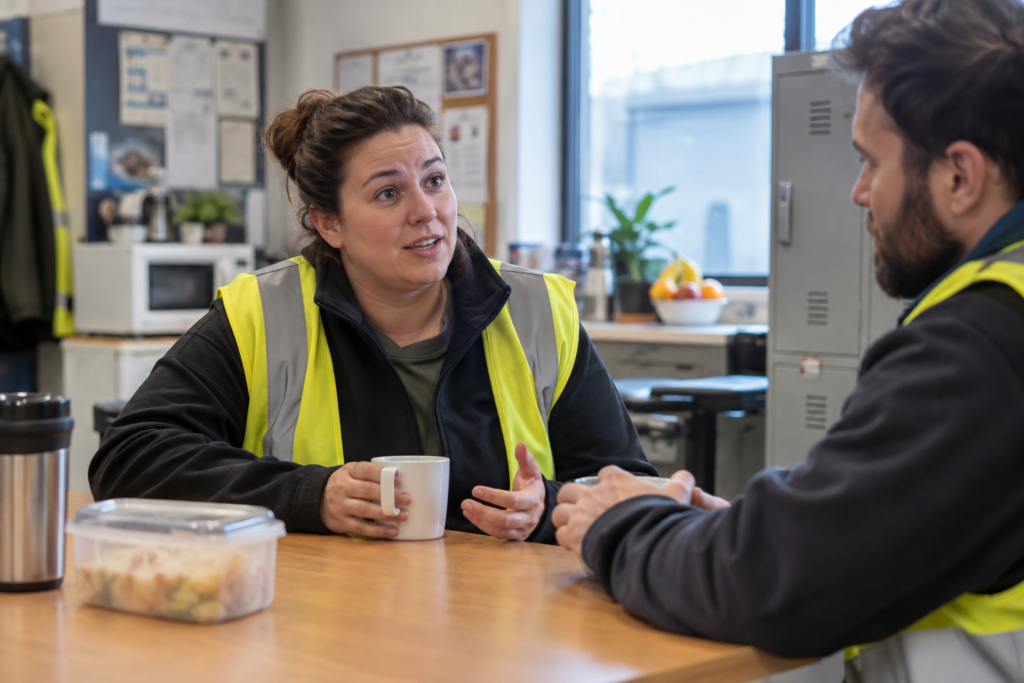
If you are struggling to stay awake at work, first stop any task where a lapse could hurt someone. Tell the appropriate person and follow workplace fatigue procedures. Breaks, a planned nap where permitted, or caffeine may support alertness, but they do not make an unsafe duty safe by themselves. NHLBI: how sleep deficiency affects health
Say what is happening
Use an observable description: “I have nodded off twice during this task” or “I am losing track of instructions.” This is more actionable than joking that you need a stronger coffee.
Ask for the change that addresses the risk: cover, reassignment, a break or removal from the task. A second check cannot substitute for being fit to perform hazardous work.
Make breaks part of the system
Agree who covers the work, where you can rest and how you will return. If workplace napping is authorised, include time after waking rather than expecting an immediate switch to critical duties. NIOSH: sleep inertia
For low-risk desk work, changing position, taking a daylight break or moving a demanding task may help you function. Do not use those options as permission to ignore repeated sleep episodes.
Include the end of the shift
Arrange the journey home before exhaustion becomes worse. A lift, suitable public transport or another safe option can be more important than finishing the shift on time. Do not start driving sleepy. NHTSA: drowsy driving
Address the repeated cause
If the roster, commute or late calls repeatedly remove sleep opportunity, discuss the arrangement. If you have adequate opportunity but still cannot stay awake, seek medical assessment. NHLBI: assessing sleep deficiency
Better Next Days treats this as shared planning: the worker notices and communicates the problem, while the people controlling workload and schedules help change the conditions that sustain it.
Related reading
Use the work scripts to ask for a concrete duty change or safe handover. Explore the free Better Next Days toolkit.
For a more complete approach to sleeping better, recovering properly and planning better days, explore Julian Talbot’s Better Nights, Better Next Days. Buy the book and companion pack.