Why Am I Still Tired After 8 Hours of Sleep?
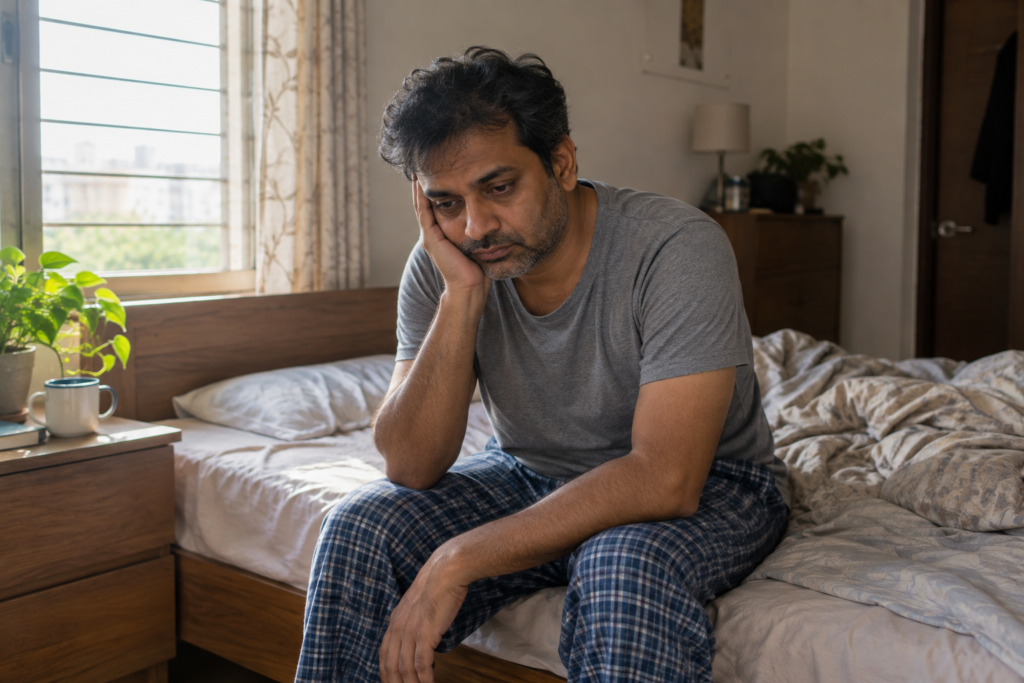
You can be tired after eight hours of sleep because duration is only one part of sleep health. The sleep may be interrupted, timed poorly for your body clock, or insufficient for your individual needs. Fatigue can also come from something other than sleep. NHLBI: how sleep deficiency affects health
Check what the eight hours actually measures
If you go to bed at 10 pm and get up at 6 am, that is an eight-hour opportunity. Time spent falling asleep or awake during the night reduces actual sleep. A wearable makes estimates; it cannot certify that you slept well or rule out a disorder.
For a few ordinary days, note bedtime, approximate time awake and getting-up time. Precision to the minute is unnecessary. Include workdays and days off, because a big difference can reveal a schedule problem.
Most adults need at least seven hours regularly, with individual variation. Eight is a useful planning example, not a universal guarantee. AASM/SRS: adult sleep duration consensus
Separate the first few minutes from the whole day
Grogginess immediately after waking can be sleep inertia. Persistent exhaustion through breakfast, work and the evening is a broader problem. Ask yourself when you begin to feel more like yourself and whether you are unintentionally dozing. NIOSH: sleep inertia
Leave room between waking and important decisions where possible. That is a practical buffer, not evidence that waiting a set number of minutes makes you safe to drive.
Look for things that interrupt recovery
Breathing pauses, choking, loud snoring, morning headaches and daytime sleepiness can be clues to sleep apnoea. They warrant clinical assessment; no single symptom confirms it. Pain, medication effects and other health problems can also matter. NHLBI: sleep apnoea symptoms
A useful appointment description is: “I usually allow eight hours, but I fall asleep in afternoon meetings. My partner has noticed gasping.” That is more informative than a green sleep score.
Choose the next step from the evidence you have
If messages consume an hour of your sleep window, change the evening arrangement. If the bedroom is repeatedly disturbed, address the disturbance. If opportunity is adequate but unrefreshing sleep persists, book an assessment instead of endlessly extending time in bed.
Better Next Days uses this approach in its sleep-opportunity and appointment-note exercises: identify the actual constraint, make one feasible change, and recognise when the next step is care.
Related reading
Use the appointment-note worksheet to record sleep opportunity alongside the daytime problem. Explore the free Better Next Days toolkit.
For a more complete approach to sleeping better, recovering properly and planning better days, explore Julian Talbot’s Better Nights, Better Next Days. Buy the book and companion pack.